

Home / Heat Exchanger Cleaning
Heat exchanger cleaningRhode Island
We run a 42″ × 36″ × 36″ ultrasonic tank in house in Johnston, Rhode Island. It reaches the inside of parts nobody can reach with a brush (heat exchanger bundles, aftercooler cores, oil coolers, turbo components) and strips out scale, salt and marine growth without abrasives and without eating the metal. And it’s big enough to take the whole part instead of what fits in a bucket.
What it actually fixes
Nobody calls asking for heat exchanger cleaning.
They call because the engine runs hot, or it isn’t making the power it used to. This is often the answer, and it’s usually the cheapest one on the table.
Overheating under load
Temperature creeps up the longer you run. A heat exchanger or aftercooler that looks fine from outside can be half blocked internally with scale, salt and marine growth.
Lost power that came on slowly
Nobody notices 8% a season. Restricted air and coolant passages choke an engine gradually enough that owners adapt to it.
Black smoke or high EGT
A fouled aftercooler starves the engine of cool, dense air, and it shows up at the stack.
An expensive part you’d rather not replace
A heat exchanger core, an aftercooler, an oil cooler. A run in our tank is $185, a fraction of buying one.
Three ways to get it done
Full heat exchanger service, or just the cleaning.
Pick how much of the job you want us to take. All three go through the same 42″ tank.
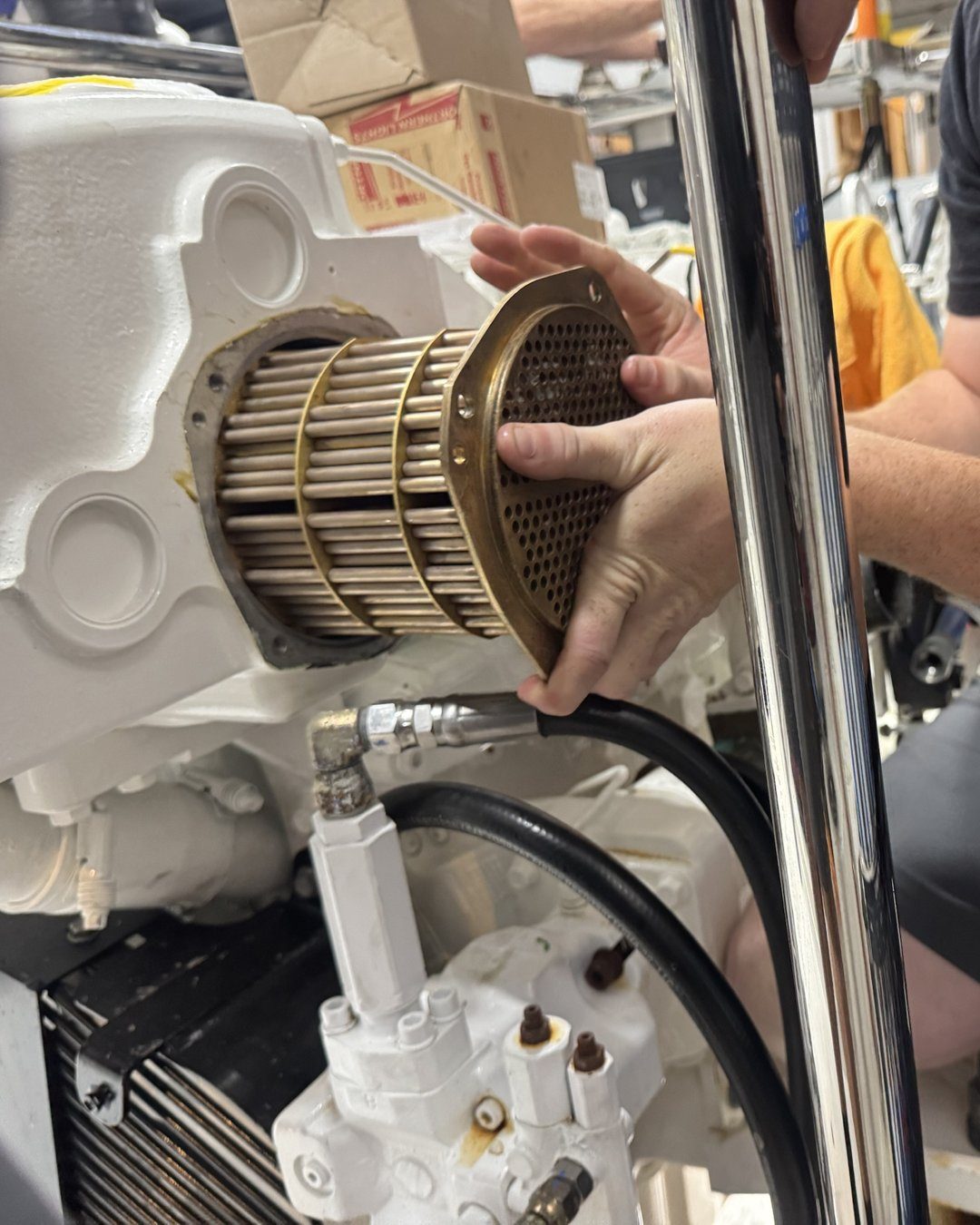
Full service
We pull it, clean it, put it back.
Removal, disassembly, ultrasonic cleaning, pressure test, reassembly and reinstall on the boat. You don’t touch a wrench. Billed at shop rate.
Bench service
You pull it, we do the rest.
Bring us the heat exchanger. We take it apart, clean it, pressure test it and put it back together, usually in 2–3 days. Billed at shop rate.
Cores only
Already apart? Bring the cores.
Drop off the cores or bundles and we run them through the tank. $185 a run, no disassembly needed.
Seized bundles
Seized heat exchanger bundle?
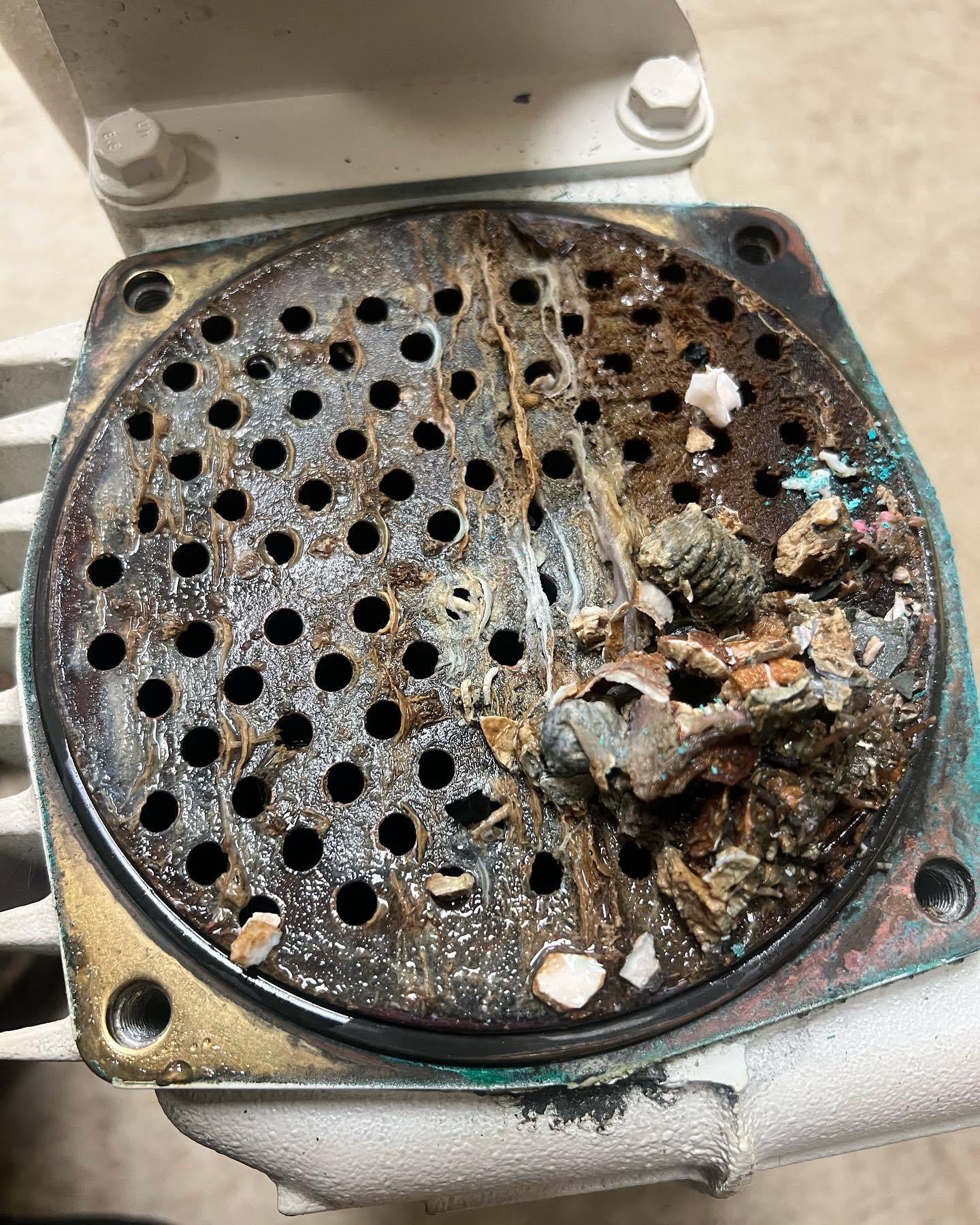
When a boat sits in its slip, sea water sits in the heat exchanger. Over time the bundle seizes into the housing, and left long enough, the whole heat exchanger has to be replaced.
Our tank is the best shot at getting a seized bundle moving. They usually free up after a run, and both the bundle and the housing come out clean.
When we put it back together, we grease the bundle-to-housing joint so it comes apart easily at the next service.
Into the tank
If it fits in a 42″ tank, it’s a candidate.
- Heat exchangers & end caps
- Seized bundles still in the housing
- Aftercooler & intercooler cores
- Oil coolers
- Turbocharger components
- Cylinder heads
- Raw water pump housings
- Raw water parts packed with marine growth
- Throttle bodies & carburetors
- Valve train & small hardware
- Transmission & gear components
We clean heat exchangers, aftercoolers and oil coolers off every make of marine diesel: Yanmar, Cummins, Caterpillar, Volvo Penta, Westerbeke, MTU and the rest.
Bring us the part or bring us the boat. If it’s something we haven’t put through before, tell us what it’s made of and we’ll tell you straight whether it’s worth trying.
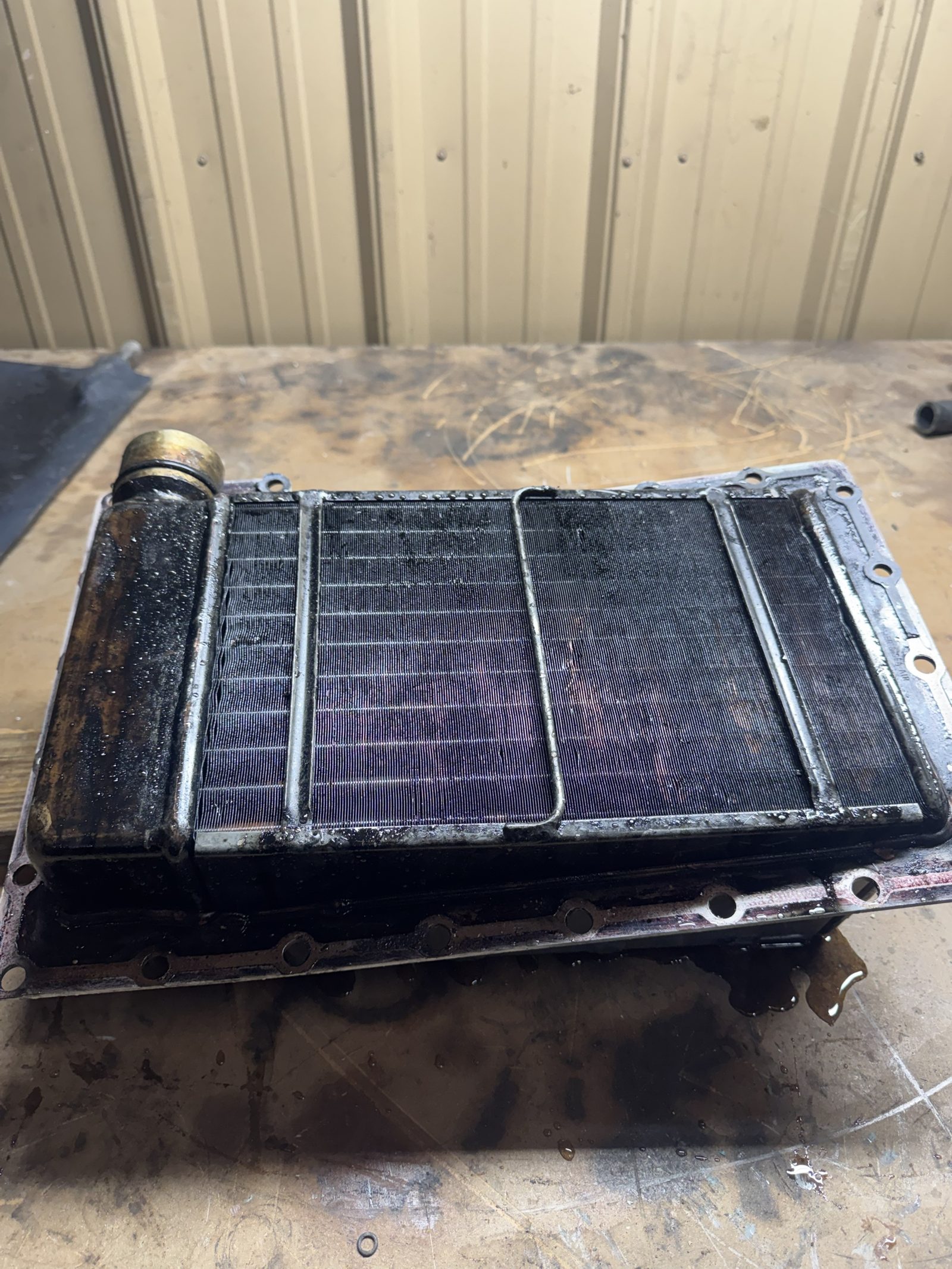
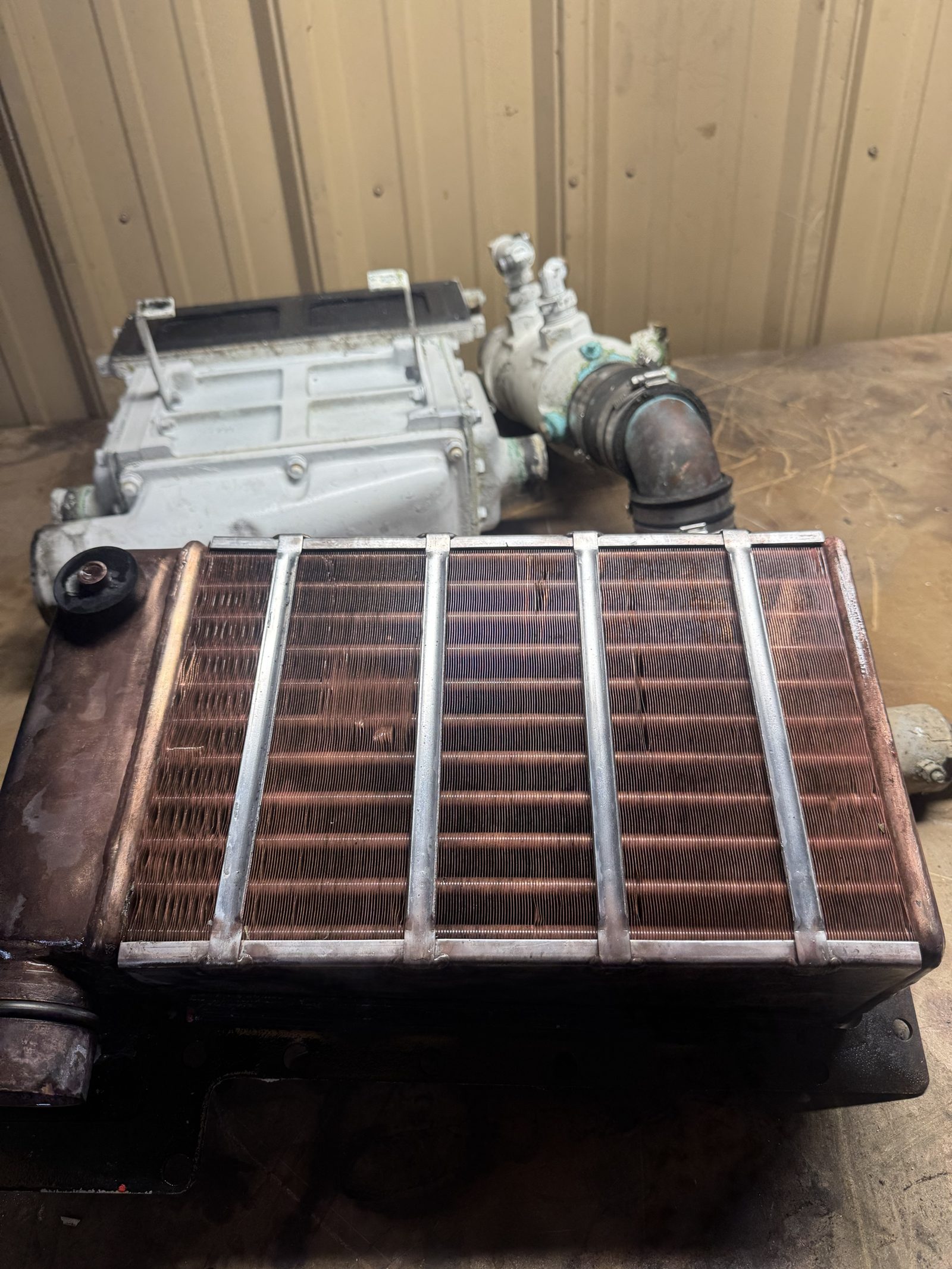
Same aftercooler core. Before and after one cycle in the tank.
The alternatives
Boiled out, acid dipped or ultrasonic?
Four ways to deal with a fouled heat exchanger. Three of them we’ve watched cost owners money. Here’s the honest comparison.
Rodded out
Rodding and brushing only reaches what a rod can reach. Everything past the first bend stays exactly as it was, which is usually where the restriction is.
Acid dipped or boiled out
A soak only works on what the solution can sit against, and nothing drives it through a packed tube stack. It usually only cleans one side of the heat exchanger, and acid strong enough to work also attacks the base metal, solder joints and gasket surfaces.
Replaced
Always works. Costs the most, and on older or larger engines the part may be weeks out or no longer made at all.
Ultrasonic
Cavitation reaches every internal passage the solution touches: around bends, through tube stacks, into blind galleries, without abrasives and without attacking the metal.
Trade work
Other yards send us parts.
Most shops don’t have a tank, so a fouled cooler becomes a new cooler on the customer’s invoice. If you’re a yard, a marina or another shop and you’d rather hand the owner a cleaned part and a smaller bill, we’ll take the work.
Our tank is 42″ long, so we can take parts most benchtop units can’t: full bundles and cores, not just small parts. Same goes for fleet and commercial operators running the same part across several boats.

Why it matters
When a cooler fails, it takes something with it.
There isn’t much metal between pressurized sea water and your engine’s fluids. That’s how a cooler moves heat, and it’s why a worn one is a risk.
- Aftercoolers. A leaking core can push sea water into the intake and destroy the engine.
- Oil coolers. A failed O-ring or a burst bundle lets water into the oil. On a gear oil cooler, that can take out the transmission.
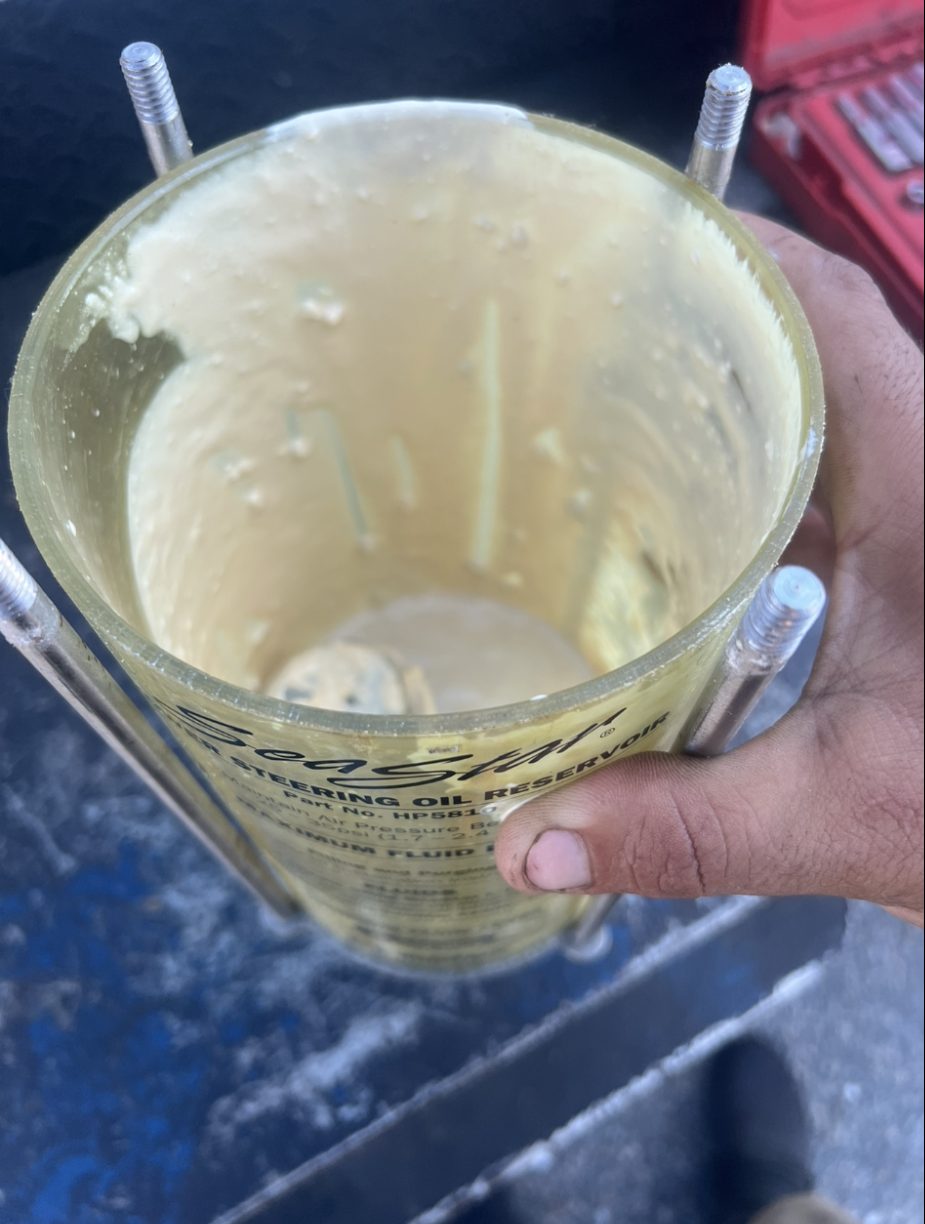
- Power steering coolers. The reservoir in the photo came off a boat whose power steering cooler ruptured.
Every heat exchanger we take apart is pressure tested before it goes back together.
Questions
Heat exchanger cleaning, answered.
Price, turnaround and what to expect when you bring us a part.
How often should a marine heat exchanger be serviced?
Every 2–5 years. On a boat, age matters more than hours: while the boat sits in its slip, sea water sits in the heat exchanger.
What happens if I skip it?
There isn’t much metal between pressurized sea water and your engine’s fluids. A leaking aftercooler core can push sea water into the intake and destroy the engine. On an oil cooler, a failed O-ring or a burst bundle lets water into the oil, and on a gear oil cooler that can take out the transmission.
Do I have to pull the heat exchanger myself?
No. Full service covers removal and reinstall on the boat. If you’d rather pull it yourself, bring it in and we’ll take it apart, clean it, pressure test it and reassemble it.
Do you pressure test?
Yes. On full service and bench service, every heat exchanger is pressure tested before it goes back together.
Is this the same as getting it boiled out or acid dipped?
No. A boil-out or acid dip is a soak, and it only works on what the solution can sit against. Our tank uses cavitation to drive the cleaning into every tube and passage, without acid eating the metal or solder.
Can’t I just flush it with Barnacle Buster or vinegar?
A flush is worth doing between services, but it has limits. It won’t clear a bundle that’s packed solid, and it won’t free a bundle that’s seized in its housing. It also doesn’t clean the air side of an aftercooler or the coolant side of a heat exchanger.
How much does marine heat exchanger cleaning cost?
A run in the tank is $185 when the part doesn’t need to come apart, like cores and bundles you bring in. Disassembly, pressure testing, reassembly, and removal and reinstall on the boat are billed at shop rate. Send us the engine and a photo and we’ll tell you what to expect.
How long does it take?
Usually 2–3 days once the part is in our shop in Johnston, RI.
Will cleaning fix my engine running hot?
If the heat exchanger or aftercooler is the restriction, it’s often the fix, and usually the cheapest one. If the problem is somewhere else, like the raw water pump or a thermostat, we’ll tell you straight.
Can you free a seized heat exchanger bundle?
Usually. Even a completely seized bundle has its best shot in our tank, and most free up after a cycle. If one still won’t move, we call you before anything is forced.
Does it remove marine growth?
Yes. Marine growth in the raw water side breaks loose in the tank, along with scale and salt.
Do you take parts from other yards and shops?
Yes. Yards, marinas, other shops and fleet operators send us parts. Our 42″ tank takes full bundles and cores that a benchtop unit can’t.
Not sure what you need yet?
Tell us the boat and what it’s doing. We’ll tell you straight whether it’s a service, a repair, or time to repower.