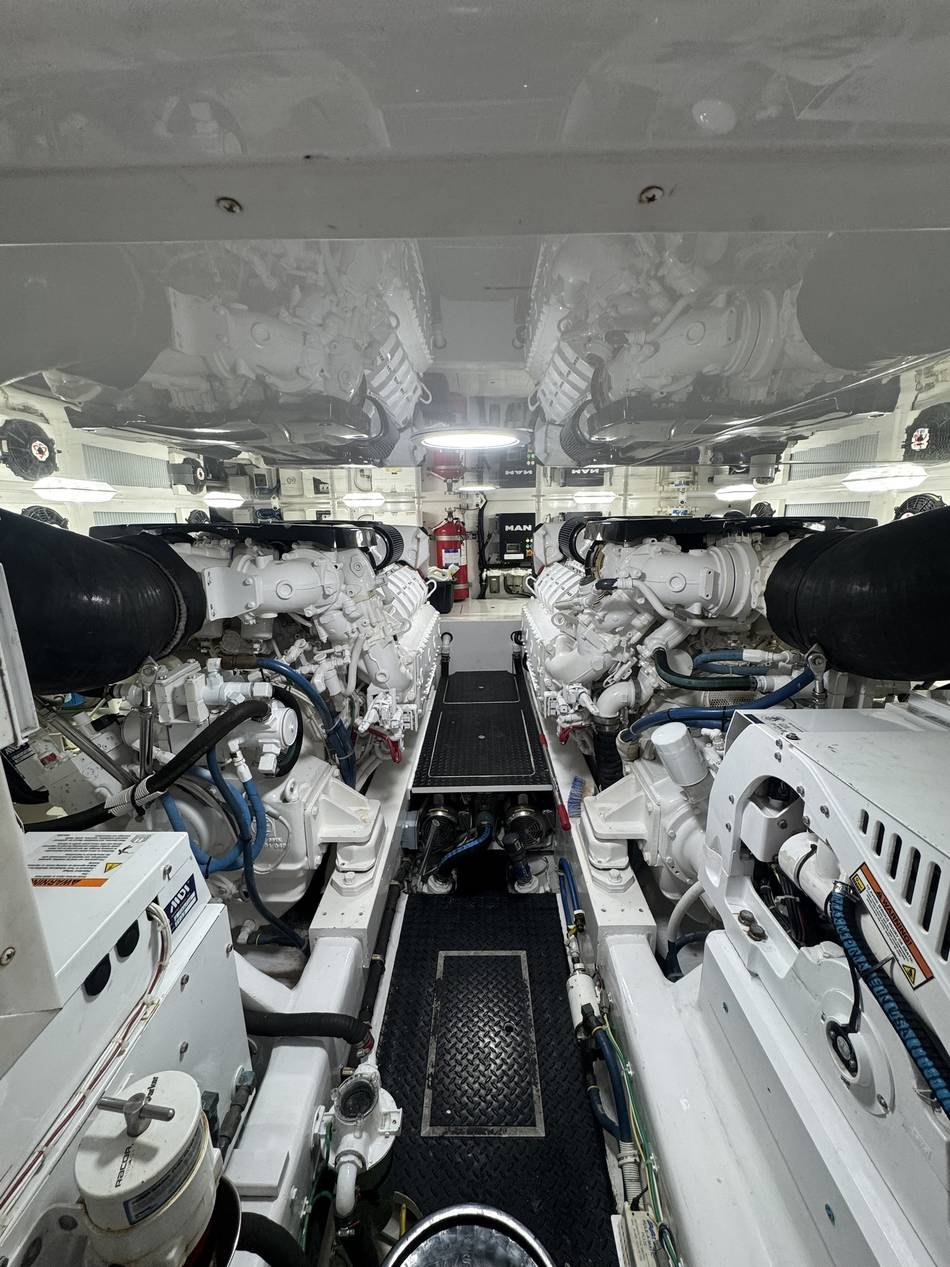
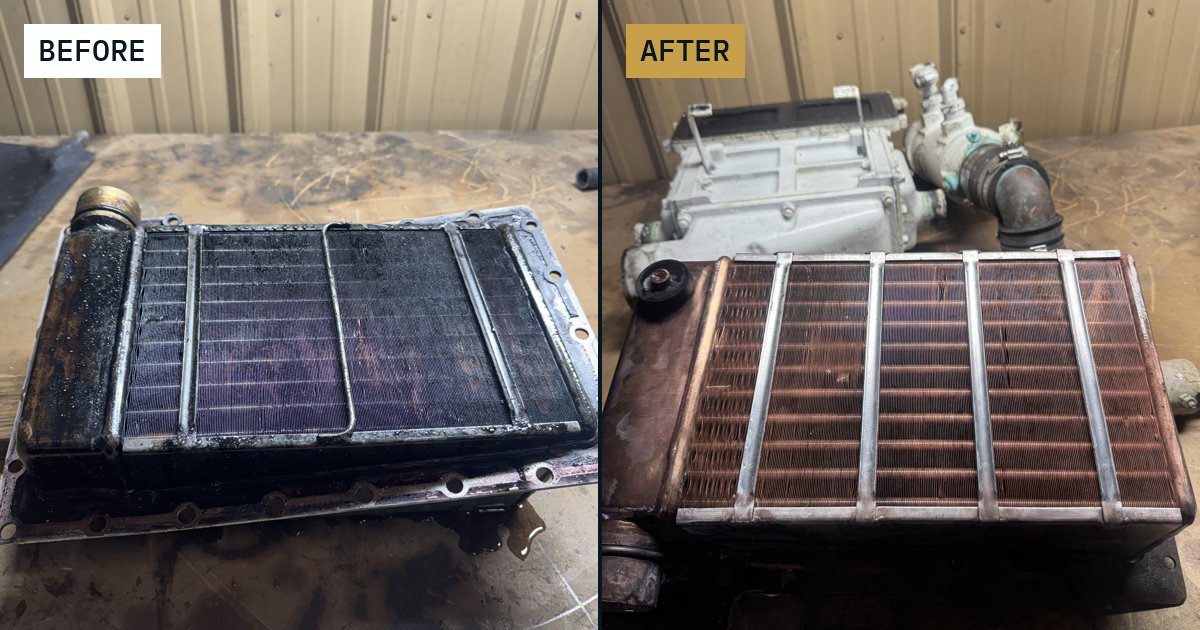
It’s seven in the morning, the boat’s been on the hook all night, and there’s a thin blue haze drifting across the transom. The owner checks the generator panel. Four hundred hours. How’s it burning oil already? There’s another number on that panel worth a look. The 20 kW generator is carrying 2 kW. Once the cabins cooled down and the batteries charged, it spent most of the night at about 10% load.
Now picture an Albin 28 coming off a long morning of trolling. There’s a similar haze behind the boat. The owner brings the main up to its usual cruise, and a few minutes later the exhaust looks clean. Somebody aboard takes credit for prescribing the Italian tune-up. Fish a little farther north and apparently it’s a Canadian cleanout.
The guy has a point. Working a diesel can change how it burns fuel, how firmly its compression rings seal, and what comes out of the exhaust. Whether that run actually fixed anything is a different question.
What blue smoke tells us
Persistent blue smoke usually means the engine is burning lubricating oil. A whitish-blue haze can also come from poorly burned diesel, especially when the engine is cold or lightly loaded. From the dock, the two can look much the same. That’s why our first questions at Coastal are “What was the engine doing when it smoked?” and “How much oil have you actually added?”
“It hazes after four hours of trolling, clears at cruise, and the oil level holds between services” gives us one place to start. “It smokes at cruise and used a quart on the run home” gives us another. Either engine could have 400 hours or 4,000. There’s no minimum hour count for underloading. Hours matter when we evaluate wear, but the meter gives an hour at idle and an hour at cruise exactly the same credit.
The generator that’s too big most of the night
Oversized generators are a common setup for chronic underloading. A boat may genuinely need a 20 kW set when the galley, water heater and air conditioners are all running. The other eight hours of the night, that same set might be carrying a refrigerator, a battery charger and one air conditioner cycling on and off. A conventional fixed-speed generator turns the same RPM through all of it. Look at the kW reading once the boat has settled in for the night.
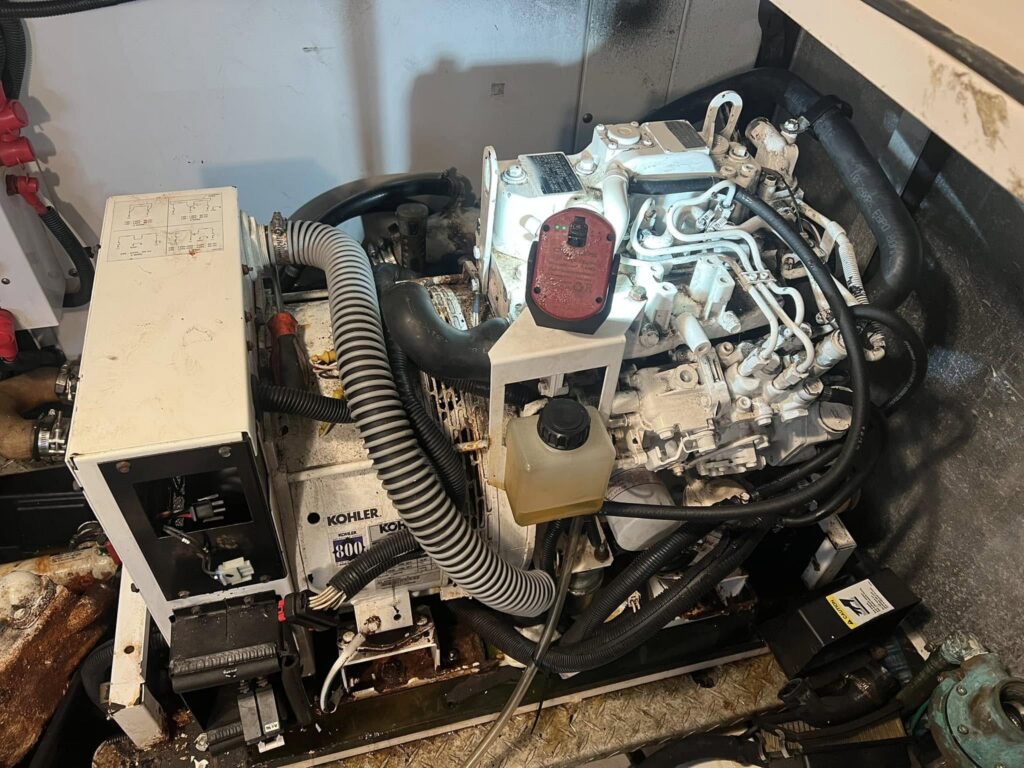
Under prolonged light load, exhaust temperatures stay lower. Fuel can burn less completely, and unburned fuel and oily residue can collect in the exhaust. That accumulation is commonly called wet stacking. A generator that smokes when the morning loads first come online may be clearing some of what collected overnight. If it keeps smoking once warm and the oil level is dropping, there’s more to investigate.
On a Kohler, that load history can also matter for warranty. Kohler marine manual TP-6772 gives a 30% minimum recommended load for the models it covers. Kohler’s published marine warranty for sets 32 kW and below excludes damage caused by operating outside its published load recommendations. If we pull an available load profile, find sustained severe underloading, and trace the engine damage to that operation, the resulting repair falls under that exclusion. The important part is connecting the operating history to the actual failure.
On a main engine, look at what the propeller is asking it to do
A Mainship 390 or Nordic Tug 42 can spend a whole season cruising comfortably at displacement speed. An Albin 28 can spend most of a fishing trip trolling. In each case, the engine may have been sized to push the boat considerably faster than the owner usually runs it. A boat can be correctly propped and still spend most of its life lightly loaded.
Then there’s a genuine hull, engine and propeller mismatch. The hull needs a certain amount of power to move at a given speed. The reduction gear determines how fast the shaft turns, and the propeller’s diameter and pitch help determine how much power it absorbs. A prop with too little diameter or pitch for the installation may let the engine reach governed RPM while absorbing less than its rated power. Too much propeller can have the opposite effect: the engine works hard and still falls short of its specified full-throttle RPM.

That’s why we’d sea-trial the boat before telling anyone to add pitch. With a clean bottom, clean running gear and the boat carrying its usual load, we compare RPM, boat speed and fuel rate with the engine maker’s performance data. Where available, we also check reported engine load and boost. A prop change made solely to work the diesel harder at seven knots can leave it overloaded the first time the owner asks for full power. More on that in why a marine diesel won’t reach rated RPM.
What the Italian tune-up actually does
On an otherwise healthy diesel, a sustained run under an appropriate load raises combustion and exhaust temperatures and can help clear residue from light running. On a main engine, that means taking the boat underway. On a generator, it means applying a measured electrical load within the manufacturer’s guidance. Blipping the throttle in neutral mostly gives the marina a demonstration of your throttle cable.
Cylinder pressure also helps the compression rings seal. Picture the top ring in its groove. Its spring tension already holds it against the cylinder wall. When the cylinder fires, combustion gas gets behind the ring and pushes its face outward against the bore. Pressure above the ring also seats it against the bottom of its groove. Ask the engine for more torque and the higher firing pressure can improve that seal on the very next power stroke. The oil-control ring farther down the piston has a different job. It meters the oil film on the wall and relies primarily on its own tension.
Can the rings actually bed back in? The strongest case is a new or freshly rebuilt engine whose rings never finished seating. A properly honed liner has a fine surface texture. During break-in, the ring face and liner wear together until they make more uniform contact. If the rings move freely and the bore still has a suitable finish, following the builder’s loaded break-in procedure can help that process continue. Northern Lights specifically addresses engines that spent too much of their initial break-in at idle or light load.
Two timescales
Ring sealing can improve in a single firing stroke. Ring seating takes time. If the haze clears in ten minutes, the engine responded to load. If oil consumption also comes down over the next several comparable trips, that’s better evidence of a lasting improvement.
When the cylinder walls glaze
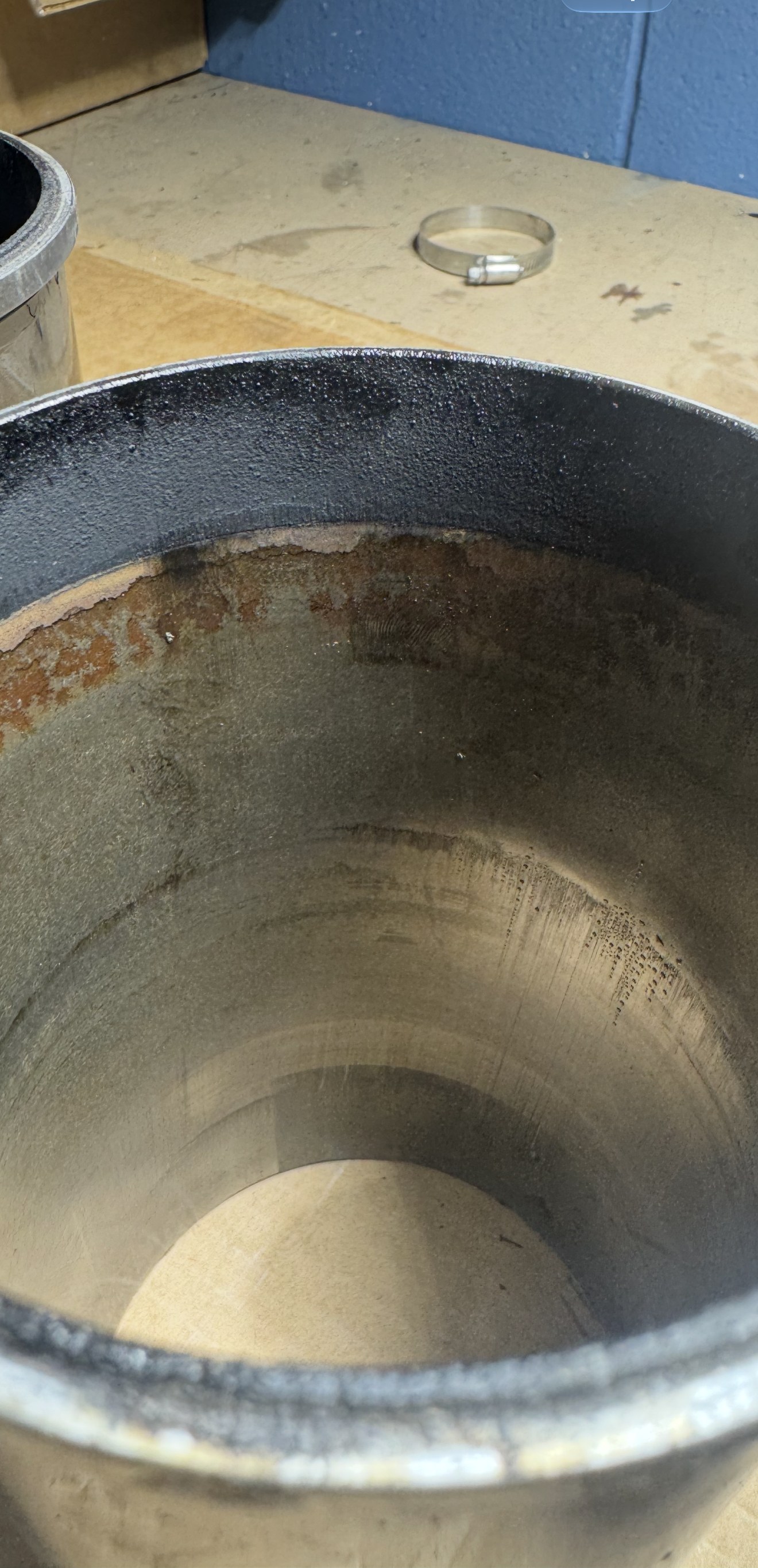
A freshly honed liner has a fine crosshatch cut into it. Those shallow grooves hold the oil film the rings ride on, and they give new rings something to bed against. Run a diesel lightly for long enough, especially early in its life, and that crosshatch can get polished smooth and varnished over with a hard lacquer from burned oil and fuel. That’s a glazed bore.
A glazed liner looks shiny, almost mirror-like, where it should look matte with a visible crosshatch. The rings can no longer seat against it, the oil film doesn’t stay put, and oil consumption and blowby climb. This is where the Italian tune-up stops helping. Once the crosshatch is gone, no amount of hard running brings it back. The fix is mechanical: the engine comes apart, and the liners are honed or replaced and fitted with new rings.
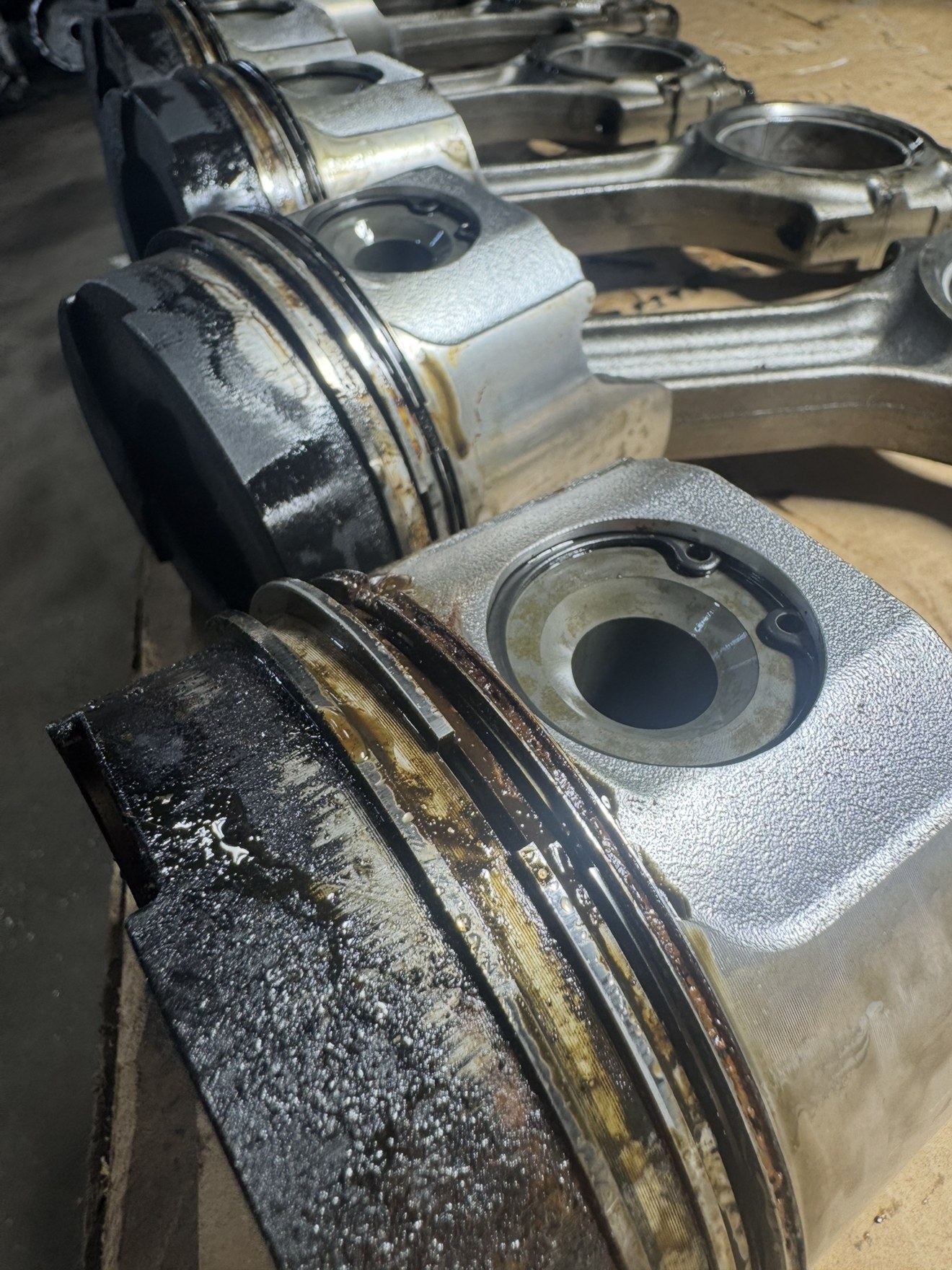
The pistons that came out of the same engine tell the rest of the story: carbon packed onto the top land and a varnish of lacquer down the skirts, the deposits that build up when an engine spends too much of its life running cool and lightly loaded.
When a cylinder wall gets washed
Wet stacking happens in the exhaust. Cylinder wash happens inside the engine. A dribbling injector, for example, can put liquid diesel on the same patch of liner every cycle. The fuel dilutes or strips away the thin oil film that the piston and rings ride on. Once a patch is completely washed, the rings pass over it with direct metal contact.
If that continues, the ring faces wear, the oil-control ring loses its scraping edges, and the piston skirt and liner can score. Compression can fall while blowby and oil consumption rise. A fault that started with too much fuel can leave the engine genuinely burning oil, even after the injector is replaced. Fuel reaching the sump can also thin the oil supplying the bearings. A rising dipstick level together with a misfire is a reason to shut down and investigate. Adding load to a cylinder that’s actively washing can make the damage worse.
What to write down on the next trip
Back on that Albin, the most useful observation comes on the next trip. Does the haze return only after hours of trolling? Does it hang there at normal cruise? Has the owner actually added oil? On the generator, we’d ask the same questions and want the kW reading when the smoke appeared. Those details tell us whether to start with how the boat is being operated or go looking for a fault. And they’re worth writing down before the guy on the dock prescribes a second Italian tune-up.
From our shop
We diagnose smoke and oil consumption on marine diesels and generators of every make, and we size replacement generators to the boat’s real loads. See generator service and engine service.
Minimum load recommendations, break-in procedures and warranty terms vary by manufacturer and model. Always follow the applicable engine and generator manufacturer’s documentation.