“It won’t make RPM” is one of the most common complaints we hear, and one of the most misdiagnosed. The boat accelerates fine down low and then flattens out short of where it used to be. Sometimes it’s one engine. Sometimes it’s both.
Low RPM is a symptom, not a diagnosis. The cause can be fuel, air, exhaust, the engine itself, or the boat asking for more power than any healthy engine can give. Finding it means measuring what the engine is and isn’t producing, and separating the boat’s problems from the engine’s.
What rated RPM means and why it matters
Every marine propulsion engine is rated to reach a specified speed under defined load. For most high-speed marine diesels, the manufacturer publishes an acceptable wide-open-throttle RPM range that should be checked at commissioning and periodically afterward.
An engine that consistently can’t reach that range is either overloaded or can’t produce its rated power. Either way, running it like that adds thermal and mechanical stress. Always work from the engine-specific rating and propping requirements.
1. Fuel delivery restrictions
A diesel can only make the power its fuel supply allows, and a restriction often won’t show up until the engine is under real load.
- Restricted primary filters
- Contaminated secondary filters
- Undersized or kinked supply plumbing
- High suction-side restriction (pickups, valves, fittings)
- Air getting into the fuel system
- A weak lift pump
- Injection system faults
A system that easily keeps up at idle can starve at full demand. We test it under the right operating conditions using the manufacturer’s procedures. A vacuum gauge on the suction side tells you more than a fresh filter ever will.
2. Turbocharger and charge-air problems
No air, no power. Low boost can come from turbo damage, intake restriction, charge-air leaks, exhaust restriction or simply not enough exhaust energy. A systematic check covers:
- Air filter condition
- Compressor and turbine condition
- Turbo bearing clearances
- Charge-air piping and clamps
- Aftercooler condition, both air side and water side
- Intake manifold pressure
- Exhaust system condition
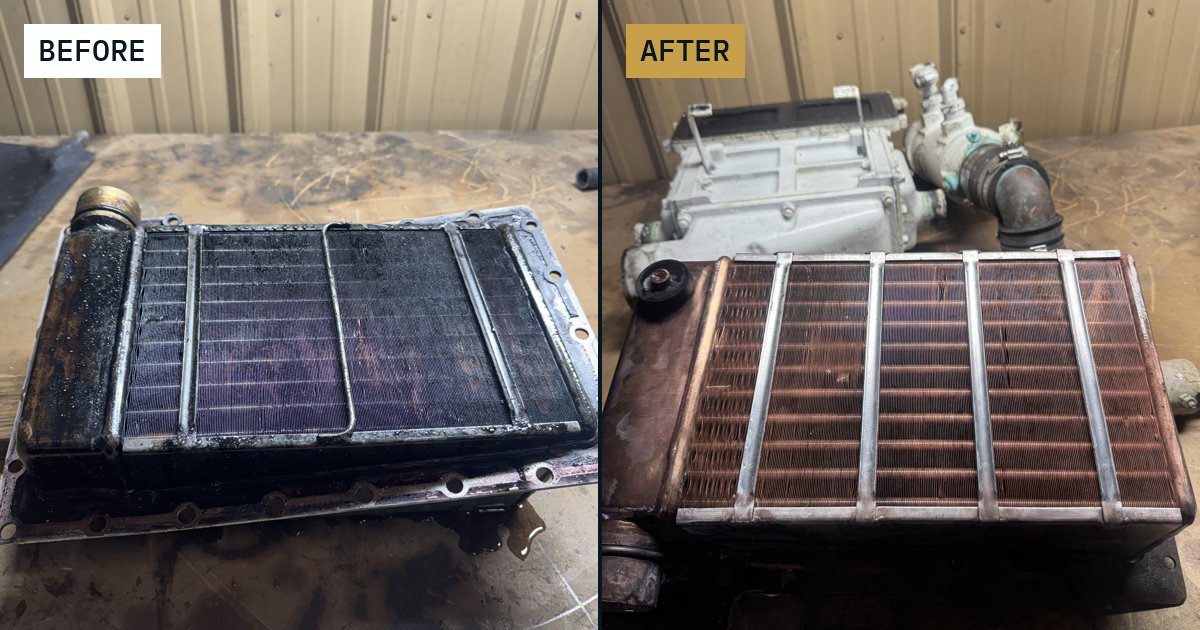
Boost readings only mean something when they’re compared to the manufacturer’s figures at the same operating point, and a low reading alone doesn’t prove the turbo has failed. Our turbocharger diagnosis guide covers this in depth, and a fouled aftercooler is one of the most common hidden causes. See cooling system failures.
3. Exhaust backpressure
If the engine can’t get rid of its exhaust gas, it can’t take in fresh air. In marine installations, backpressure comes from collapsed or delaminated hose, a restricted mixing elbow, a poorly designed exhaust run, or problems in the wet-exhaust system such as an undersized waterlift.
Backpressure hurts both turbo performance and overall power. It’s measured at the manufacturer’s designated point with suitable equipment. Guessing from the sound of the exhaust doesn’t work.
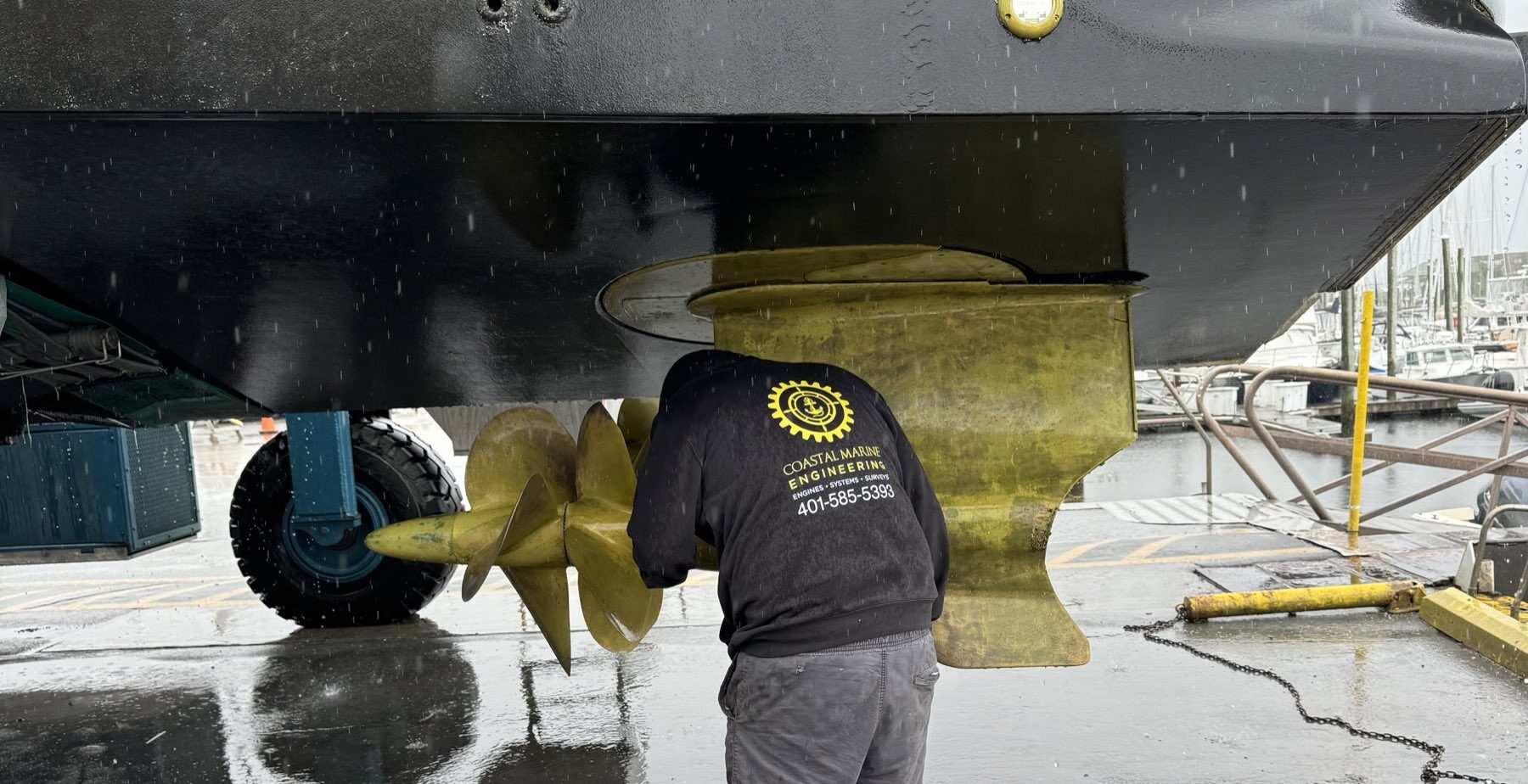
4. Propeller loading and hull condition
This is the one most often overlooked. A perfectly healthy engine won’t reach rated RPM if the propeller is absorbing more power than the engine can make.

- Incorrect propeller pitch, or props swapped without re-propping
- Dinged, bent or repaired blades
- Bottom and running-gear growth
- Added displacement: tenders, tanks, gear, water and fuel
- Changes from the boat’s original configuration
That’s why we never evaluate an engine’s performance without also looking at the boat.
Engineering view · the propeller law
A fixed-pitch propeller absorbs power roughly with the cube of shaft speed:
n = shaft speed · k = load constant set by prop diameter, pitch, blade area, hull resistance and displacement
The engine settles wherever the propeller’s demand curve meets the engine’s maximum-power curve. Anything that raises k (more pitch, a fouled bottom, another 1,500 lb of gear) moves that meeting point to a lower RPM, where the engine is already at full fuel.
Run the numbers backwards and you see why small RPM losses matter. An engine rated at 2,300 RPM that only reaches 2,200 is turning a propeller that asks for about (2300/2200)³ ≈ 1.14 times the load it was propped for: roughly 14% overload, sustained every time the throttle is pushed down. That’s where high exhaust temperatures, smoke and shortened engine life come from, even though nothing on the engine is broken.
The same model separates the two cases. An engine that can’t make power comes up short whatever the load. A healthy engine on an overloaded boat reaches rated RPM once k comes back down: a clean bottom, a lighter load, or corrected pitch. Comparing boost and exhaust temperature to the published data at the RPM actually reached tells you which case you’re looking at before anything gets taken apart.
5. Valve and injector adjustment
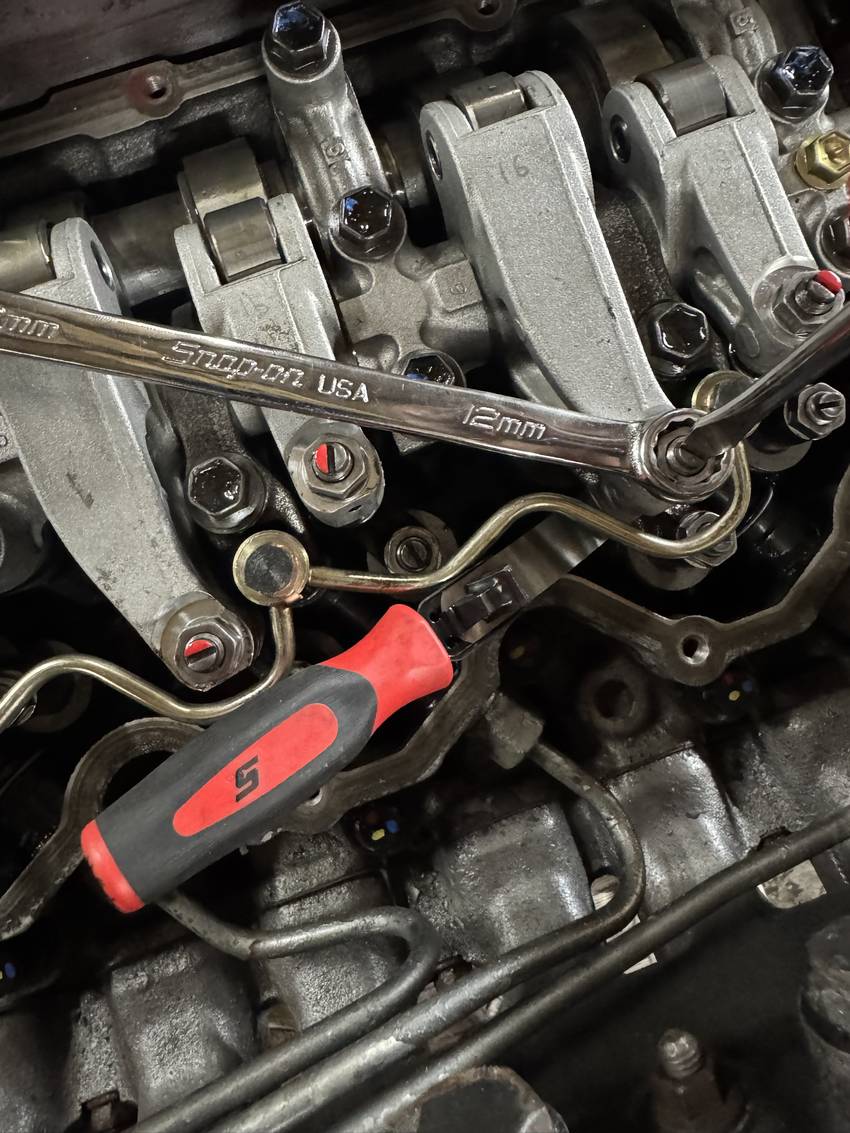
On engines with adjustable valve lash or mechanically adjusted injectors, incorrect settings affect combustion, power and exhaust temperature. Adjustment procedures vary widely between manufacturers and engine families, so we confirm the exact engine configuration and use its published specs. There are no universal numbers.
6. When both engines come up short
If both engines on a twin miss rated RPM, look first at what they share:
- Hull fouling
- Vessel loading
- Contaminated fuel
- Restrictions in shared fuel system components
- Propeller configuration
- The same maintenance gaps on both engines
The same symptom on both sides doesn’t mean the same failure. An overloaded boat can hold back two perfectly good engines. Two engines with the same neglected maintenance can develop matching restrictions. The job is to separate the boat’s problems from each engine’s own.
| Pattern | Points toward |
|---|---|
| Both engines short by a similar amount | The boat: loading, bottom, props, or shared fuel. |
| One engine short, the other on spec | That engine: fuel, air, exhaust or mechanical condition. |
| Short RPM with high exhaust temperature and smoke | Overload, or too little air for the fuel being delivered. |
| Short RPM with low boost and clean exhaust | Fuel delivery or an engine-side limit. |
How we run a performance test
A useful diagnosis starts with a reliable baseline. On a controlled sea trial we record:
- Exact engine models and rated-speed specifications.
- Engine hours and maintenance history.
- Vessel loading and hull condition.
- Fuel-system operating parameters.
- Boost pressure under representative load.
- Exhaust temperature, where applicable.
- Coolant and oil temperatures.
- Electronic diagnostic data.
- Exhaust backpressure, when indicated.
- Actual engine RPM at each test point.
Measurements are taken under comparable conditions so they can be compared engine to engine and against the spec. That’s how a repair plan gets targeted instead of becoming trial and error.
Why guessing gets expensive
A new turbo won’t fix a fuel restriction. Fuel system work won’t fix the wrong prop. The approach that saves money is to establish what the engine isn’t producing, identify which system is responsible, fix that, and prove it on the water afterward.
From our shop
We diagnose the whole installation (engine, fuel, air, exhaust and the boat itself) on Volvo Penta, Caterpillar, MAN, Cummins, MTU and more. See engine service & overhauls.
Engine performance testing should be performed in accordance with manufacturer requirements and safe vessel operating procedures.